Closing a business in the UAE is never simple. There are many legal steps to follow. One of the most important and often overlooked is VAT deregistration in UAE during liquidation.
If you skip this step, your company could face serious penalties. The Federal Tax Authority (FTA) can fine you thousands of dirhams. It can also delay your liquidation process. In some cases, it can even create legal complications.
Many business owners focus only on closing their trade license. They forget about their VAT registration. This is a costly mistake. Your VAT registration does not cancel automatically when you close your business.
This guide explains everything you need to know. You will learn the requirements, documents, deadlines, and steps to complete VAT deregistration properly. By the end, you will feel confident and prepared.
What Is VAT Deregistration in UAE?
VAT deregistration means cancelling your VAT registration with the FTA. When you registered for VAT, you were given a Tax Registration Number (TRN). Deregistration removes this number. It officially ends your tax obligations with the FTA.
The Federal Tax Authority manages all VAT registrations in the UAE. It also handles all deregistration requests. You must apply through the FTA’s online portal called EmaraTax.
Therefore, if your company is closing down, VAT deregistration is not optional. It is a legal requirement.
Is VAT Deregistration Mandatory During Liquidation?
Yes. VAT deregistration is mandatory when a company goes through liquidation in the UAE. This is clearly stated under UAE VAT law. You must apply for deregistration within 20 business days of stopping taxable activities.
If you do not deregister on time, the FTA can impose penalties. These fines can be significant. Also, your liquidation process cannot be completed properly without VAT clearance. Government departments and banks may ask for proof of VAT deregistration.
For example, imagine a company shuts down operations in January. It stops all taxable supplies on January 15th. The company must apply for VAT deregistration by February 12th (20 business days later). Missing this deadline means penalties.
So, the answer is clear. Deregistering your VAT is not a choice. It is a legal obligation during company liquidation.
Requirements for VAT Deregistration in UAE During Liquidation
There are several key requirements you must meet. Let us break them down one by one.
1. Company Must Cease Taxable Activities
The most basic requirement is that your company must stop all taxable activities. This means no more buying or selling of taxable goods or services. The FTA considers the date you stopped activities as the starting point for your deregistration timeline.
You must be able to prove when your taxable activities ended. Keep records of your last transaction date. This date will be used in your deregistration application.
2. Trade License Cancellation Proof
You must provide evidence that your trade license has been cancelled. This is one of the key documents the FTA requires. It proves that your business is officially closing.
Contact the Department of Economic Development (DED) or your free zone authority. Get the official trade license cancellation certificate. Without this document, your VAT deregistration application may be rejected.
3. Clearance of All VAT Liabilities
You cannot deregister for VAT if you owe any taxes. All outstanding VAT must be paid before the FTA approves your application. This includes any unpaid VAT from previous return periods.
Also, any penalties or fines must be settled. The FTA will check your account. If there are unpaid amounts, your application will be put on hold.
4. Submission of Final VAT Return
Before deregistering, you must file your final VAT return. This covers the period from your last return up to the date your business stopped. It is also called the “closing VAT return.”
This return must be accurate. It should reflect all transactions made during that final period. Any VAT owed in this return must also be paid in full.
5. Supporting Documents Required
The FTA requires several documents to process your deregistration. These documents prove that your company is closing and that all obligations are met. We will cover the full list in the next section.
6. Liquidator Involvement (If Applicable)
In some cases, a licensed liquidator is appointed. This happens when the liquidation is court-ordered or involves complex financial matters. The liquidator plays an important role in VAT deregistration.
The liquidator may need to submit the application on behalf of the company. They also help ensure that all tax obligations are cleared before the company is dissolved. If your business has an appointed liquidator, make sure they coordinate directly with the FTA.
Documents Required for VAT Deregistration

Having the right documents ready saves time. It also prevents delays or rejection of your application. Here is a complete list of documents you will need:
- Trade license cancellation certificate
- Emirates ID copies of owners or directors
- Passport copies of owners or directors
- Original VAT registration details and TRN number
- Proof of final VAT return submission
- Evidence of payment of all outstanding VAT
- Latest financial statements
- Liquidation documents (court order, liquidator appointment letter, etc.)
- Bank account closure letter (if applicable)
- Any contracts or agreements showing cessation of business activities
Make sure all documents are clear and up to date. The FTA may request additional documents during their review. Be prepared to respond quickly.
Step-by-Step VAT Deregistration Process in UAE
Follow these steps carefully to complete your VAT deregistration.
Step 1: Log In to the EmaraTax Portal
Visit the FTA’s official portal at eservices.tax.gov.ae. Log in using your registered email and password. This is the same account you used when you registered for VAT.
Step 2: Submit Your Deregistration Application
Go to the VAT section. Select the deregistration option. Fill in all the required fields carefully. Include the date your taxable activities stopped.
Step 3: Attach All Required Documents
Upload all the documents listed above. Make sure each file is clear and readable. Incomplete applications will be delayed or rejected.
Step 4: Settle Outstanding VAT and Penalties
Before submitting, check your VAT account balance. Pay any remaining VAT, fines, or penalties. Keep proof of payment. The FTA will not approve your application if any amount is outstanding.
Step 5: File Your Final VAT Return
If you have not already done so, submit your final VAT return. This covers your last trading period. Make sure all figures are accurate and complete.
Step 6: FTA Review and Approval
The FTA will review your application. This process typically takes 20 business days. They may contact you for additional information. Respond promptly to avoid delays.
Step 7: Receive VAT Deregistration Confirmation
Once approved, you will receive an official confirmation from the FTA. Your TRN will be cancelled. You are now officially deregistered from VAT. Keep this confirmation letter for your records.
VAT Deregistration Deadline in UAE
The UAE VAT law is very clear about deadlines. You must apply for VAT deregistration within 20 business days of stopping taxable activities.
This 20-day rule is strict. Missing this deadline results in financial penalties. The standard penalty for late VAT deregistration This fine can increase depending on how late the application is.
Here is a practical example. A trading company stops all operations on March 1st. It must apply for VAT deregistration by March 29th (counting 20 business days). If the company applies on April 10th, it is late.
Therefore, act quickly once your business stops operations. Do not wait. The sooner you apply, the better.
Common Mistakes to Avoid
Many businesses make avoidable mistakes during VAT deregistration. Here are the most common ones.
Not Filing the Final VAT Return Some companies forget to file their last VAT return. This is a major error. The FTA will not process your deregistration without it. Always submit the final return before applying.
Ignoring Pending VAT Liabilities Outstanding VAT balances will block your application. Check your tax account carefully. Pay everything owed before you apply.
Submitting a Late Application As explained above, the 20-business-day rule is firm. Delays result in penalties. Always start the process as soon as your business stops.
Incorrect or Incomplete Documentation Missing documents cause delays. Wrong information can lead to rejection. Double-check every document before uploading. Use clear, legible scans.
Not Informing the Liquidator If a liquidator is involved, keep them informed. They need to be part of the VAT deregistration process. Miscommunication leads to costly delays.
Penalties for Non-Compliance
Failing to deregister your VAT on time has serious consequences. Here is what can happen.
The FTA can impose an administrative penalty for late deregistration. If you continue to ignore your VAT obligations after closing, further penalties may apply.
In addition, your company liquidation cannot be finalised without VAT clearance. Government departments may refuse to process your closure. Banks may also freeze or delay account closures.
In extreme cases, the FTA can take legal action. This can result in court proceedings against the business owners. The legal costs and reputational damage can be severe.
The message is simple. Comply on time. The cost of non-compliance is far greater than the cost of proper professional assistance.
Why Professional Help Is Important
UAE VAT law is detailed and complex. Many business owners are not familiar with FTA procedures. Small errors in your application can lead to big problems.
A professional VAT consultant understands the full process. They know exactly what documents are needed. They can file your final VAT return correctly. They also help you avoid penalties and errors.
Hiring an expert saves you time. It also gives you peace of mind. Instead of struggling with government portals and tax laws, you can focus on other aspects of your closure.
Professional support also reduces the risk of rejection. Experts ensure your application is complete and accurate. This leads to faster approval from the FTA.
For a business going through the stress of liquidation, this kind of support is invaluable.
Why Choose Leads Accountancy
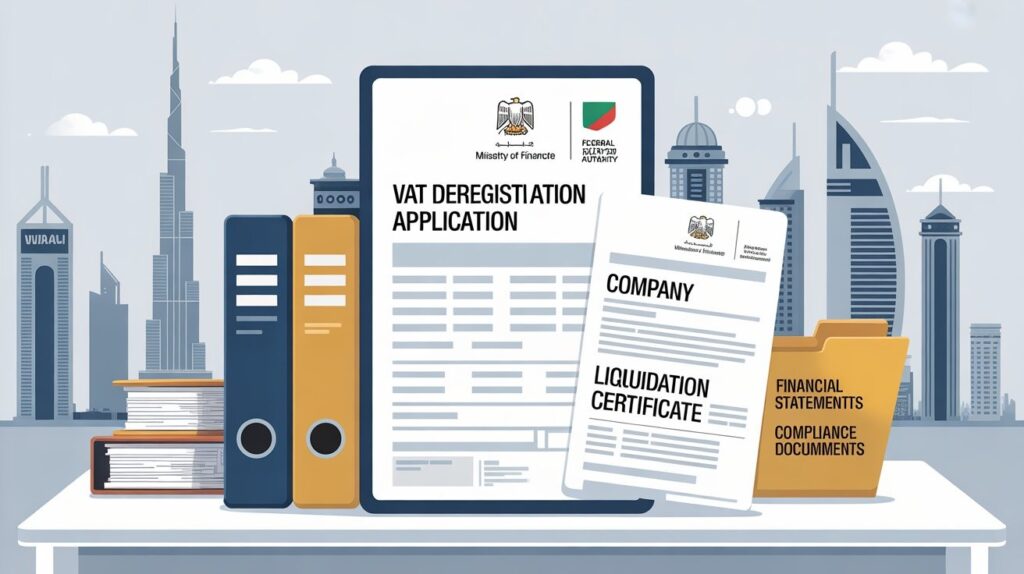
At Leads Accountancy, we specialise in helping businesses navigate the complexities of VAT deregistration in UAE during liquidation. Our team has deep knowledge of UAE tax law and FTA procedures.
Here is what we offer:
- VAT Deregistration Services: We handle your entire deregistration process from start to finish. We prepare and file your final VAT return, settle liabilities, and submit your application.
- Company Liquidation Support: We guide you through every step of the liquidation process. We coordinate with government departments, banks, and free zones on your behalf.
- Tax Compliance Advice: We ensure all your tax obligations are met before and after closure. No surprises, no penalties.
- Document Preparation: We help you gather and prepare all required documents. We make sure nothing is missing.
- FTA Liaison: We communicate directly with the FTA on your behalf. We follow up on your application and respond to any queries promptly.
Our clients trust us because we deliver results. We are transparent, professional, and efficient. We have helped many businesses in the UAE close their operations smoothly and without legal complications.
Conclusion
VAT deregistration in UAE during liquidation is a legal requirement that must not be ignored. Failing to comply can result in heavy fines, delays in your liquidation, and serious legal issues.
The key steps are clear. Stop taxable activities, cancel your trade license, clear all VAT liabilities, file your final VAT return, and submit your deregistration application within 20 business days. Gather all required documents and use the EmaraTax portal to apply.
Mistakes in this process are common but avoidable. Professional guidance makes a significant difference. It saves time, money, and stress.
If you are closing your business in the UAE, do not leave VAT deregistration to chance. Contact Leads Accountancy today. Our experts are ready to help you close your business properly, legally, and without complications.
Get in touch with Leads Accountancy now for a free consultation on VAT deregistration and company liquidation in the UAE.
Frequently Asked Questions (FAQs)
Q1. How long does VAT deregistration take in UAE?
The FTA typically takes up to 20 business days to review and approve a VAT deregistration application. However, this can take longer if documents are incomplete or if there are outstanding liabilities. Having everything ready before you apply speeds up the process significantly.
Q2. Can I cancel VAT registration before completing liquidation?
Yes. In fact, it is recommended that you start the VAT deregistration process as early as possible. You can begin the process once your taxable activities have stopped, even if the full liquidation is still underway. However, you must have cancelled your trade license and cleared all VAT dues.
Q3. What happens if I miss the 20-business-day VAT deregistration deadline?
If you miss the deadline, the FTA will impose a penalty.Additional fines may apply if obligations remain unmet. It is always better to apply on time or seek professional help to avoid these costly penalties.
Q4. Do I need a VAT clearance certificate for liquidation in UAE?
Yes. A VAT clearance certificate confirms that your business has no outstanding VAT obligations. Many government departments and free zone authorities require this certificate before completing the company liquidation. The FTA issues this after your deregistration is approved.
Q5. Who can apply for VAT deregistration during liquidation?
The business owner, authorised signatory, or an appointed liquidator can submit the VAT deregistration application. If you have a licensed liquidator managing your company closure, they will typically coordinate this process with the FTA on your behalf